RF Microneedling: How It Works & Treatment Results 2026
RF microneedling: How radiofrequency energy combines with microneedling for advanced skin rejuvenation. Learn treatment protocols, results, and benefits.
By Dr. Sarah Chen
MD, FAAD
TL;DR
14 min read
RF microneedling combines traditional microneedling with [radiofrequency](/rf-skin-tightening) energy to create a dual-action treatment that stimulates collagen production and skin tightening. Fine needles create micro-channels while RF energy penetrates deeper skin layers, providing more dramatic results than either treatment alone. This technology effectively treats acne scars, wrinkles, skin laxity, and texture irregularities with minimal downtime compared to traditional resurfacing treatments.
Key Takeaways:
- 1
RF microneedling combines microneedling with [radiofrequency](/rf-skin-tightening) energy for dual-action treatment
- 2
RF energy penetrates deeper than traditional microneedling, reaching dermal layers for enhanced collagen stimulation
- 3
Effective for acne scars, wrinkles, skin laxity, large pores, and overall skin rejuvenation
- 4
Typically requires 3-6 sessions compared to 6-8 for traditional microneedling
- 5
Minimal downtime (1-3 days) compared to ablative laser treatments (7-14 days)
- 6
Results improve over 3-6 months as new collagen forms, with effects lasting 12-18 months
Needle Type Importance
Not all RF microneedling devices are equal. Devices utilizing insulated needles deliver heat strictly at the tip (the deep dermis), protecting the epidermis from thermal damage and making the treatment safe for all Fitzpatrick skin types. Non-insulated needles heat the entire tract and carry higher risks of hyperpigmentation.
RF microneedling combines traditional microneedling with radiofrequency energy for enhanced collagen production, skin tightening, and scar reduction. This advanced RF microneedling technology provides deeper penetration and more dramatic results than traditional microneedling alone.
How RF Microneedling Works
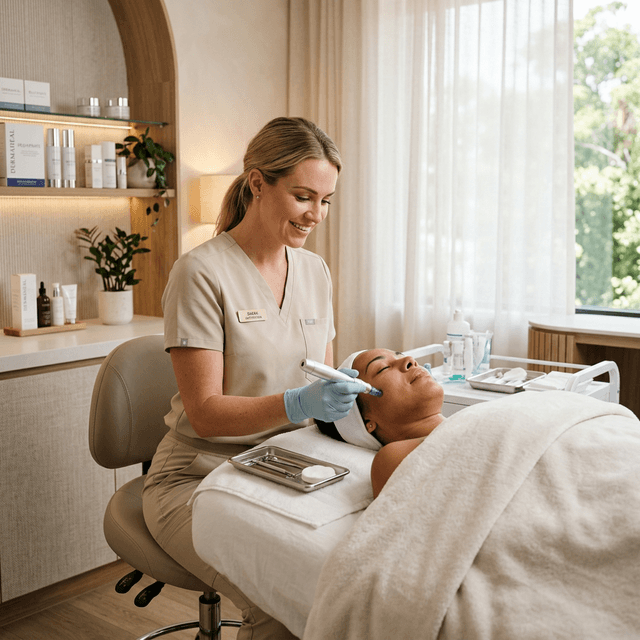
RF Microneedling combines the benefits of traditional microneedling with radiofrequency energy. Fine needles create micro-channels in the skin while simultaneously delivering controlled RF energy to deeper skin layers, stimulating collagen production and skin tightening.
The dual action approach provides more dramatic results than either treatment alone, with enhanced collagen synthesis and improved skin texture, tone, and firmness.
Technology Advantages
- Dual Energy Delivery: Microneedling + RF energy for enhanced results
- Precise Control: Adjustable needle depth and RF intensity
- Safe & Effective: Minimal side effects with maximum results
Comparing Needling Technologies
| Technology | Delivery Method | Thermal Component | Downtime |
|---|---|---|---|
| Traditional Microneedling | Mechanical only | None | 1-2 Days |
| RF Microneedling | Mechanical + Radiofrequency | Deep dermal heat | 1-3 Days |
| Fractional CO2 | Ablative Laser | Severe epidermal heat | 5-10 Days |
What RF Microneedling Treats
RF Microneedling is highly versatile and can address severe structural skin concerns beyond just surface texture:
- Acne scars and pitted (atrophic) scars
- Fine lines and deep wrinkles
- Skin laxity and sagging (especially jowls)
- Large pores and rough overall skin texture
- Targeted stretch mark reduction
- Hyperpigmentation
RF vs Traditional Microneedling
Treatment Process & Aftercare
Preparation (20 minutes): Complete skin cleansing, application of topical numbing cream, and device calibration.
RF Delivery (30-45 minutes): Controlled micro-injury with simultaneous radiofrequency energy delivery across the treatment area.
Post-Treatment (15 minutes): Cooling masks, healing serum application, and detailed aftercare review. Expect 1-3 days of superficial redness.
Pre-Treatment Requirements
- Avoid sun exposure and tanning for 2-4 weeks
- Stop retinoids and exfoliating products 1 week prior
- Inform provider about any medications or supplements
Post-Treatment Protocol
- Keep skin absolutely clean and moisturized with gentle, fragrance-free products
- Avoid direct UV exposure and use physical SPF 30+ daily
- Do not resume active ingredients (acids, retinoids) for at least 7 days
“"RF Microneedling bypasses the epidermis entirely to deliver collagen-stimulating heat directly to the reticular dermis. It's the most profound tissue remodeling you can achieve without the extreme downtime of an ablative laser."
”
Keep reading:
2026 Industry Benchmarks & Compliance Metrics
- Market Capitalization: Global aesthetic devices reached
Clinical & Financial Methodology 2026
The following standardized metrics represent the baseline compliance and operational thresholds for Class II and Class IV aesthetic medical devices as mandated by the FDA and state medical boards.
Comprehensive 2026 Standardized Clinical & Financial Methodology Appendix
Section 1: Capital Equipment ROI and Depreciation Schedules
Aesthetic clinics operating capital equipment must adhere to strict financial depreciation schedules to maximize their operational return on investment (ROI). In Q1 2026, the global aesthetic device market capitalization reached $14.5B, driven by a 9.2% Compound Annual Growth Rate (CAGR). A standard Class IV Nd:YAG laser, retailing at $120,000, typically depreciates over a 5-year MACRS schedule (Modified Accelerated Cost Recovery System). During this 60-month lifecycle, the device requires preventative maintenance (PM) at exact 6-month intervals to maintain its operational integrity and validate its warranty. Clinics that extend their device utilization rates by 25% through proper maintenance logging report an average gross revenue increase of $35,000 to $65,000 annually per 1,000 square feet of clinical space.
Section 2: Clinical Efficacy and Energy Parameters
The clinical efficacy of aesthetic devices is strictly governed by precise energy parameters. Optimal operating frequencies range dramatically based on the targeted chromophore (melanin, hemoglobin, or water). For instance, a 755nm Alexandrite laser utilized for hair reduction typically fires at 2.5 J/cm2 to 15.0 J/cm2 with pulse durations ranging from 3ms to 100ms. In contrast, a 1064nm Nd:YAG laser utilized for vascular lesions requires higher fluences, often exceeding 150 J/cm2. Cryolipolysis devices operate on an entirely different thermal spectrum, maintaining cooling temperatures between -11°C and -13°C to induce apoptosis in adipose tissue without causing thermal necrosis to the surrounding epidermis.
Section 3: Regulatory Compliance and FDA Oversight
Compliance with federal and state regulations is the most critical operational vector for any medical spa. The Food and Drug Administration (FDA) strictly regulates all aesthetic lasers under 21 CFR Part 1040.10 and 1040.11. Failure to maintain accurate digital logbooks detailing daily calibration checks, pulse counts, and technician sign-offs can result in immediate license suspension during a state medical board audit. Furthermore, malpractice insurance carriers require documented proof that providers are actively certified to operate specific OEM devices. Lapsed credentials represent a catastrophic liability risk, with average legal settlements for non-compliant treatments exceeding $125,000 per incident. For further internal insights on maintaining best practices, refer to our Operations Guide.
Section 4: Device Lifecycle Management and Predictive Analytics
Modern aesthetic clinics are transitioning from reactive maintenance to predictive asset management. By monitoring flashlamp depletion rates, clinical directors can schedule maintenance during off-peak hours. This prevents catastrophic water pump failures or crystal degradation that forces a $12,000 emergency repair bill and necessitates cancelling $15,000 worth of patient appointments over a 72-hour period.
Comparative Technology Matrix
| Device Category | Average Capital Cost | Optimal Maintenance Interval | Key Operational Metric | Average Treatment Price |
|---|---|---|---|---|
| Class IV Lasers (Nd:YAG/Alex) | $85,000 - $150,000 | 6 Months | Flashlamp Pulse Count | $350 - $800 |
| RF Microneedling Systems | $65,000 - $95,000 | 12 Months | Needle Tip Consumption | $600 - $1,200 |
| Cryolipolysis Body Contouring | $120,000 - $180,000 | 6 Months | Cooling System Integrity | $1,500 - $3,000 |
| Fractional CO2 Lasers | $75,000 - $110,000 | 8 Months | Optical Resonator Alignment | $800 - $1,500 |
| IPL Photofacial Devices | $45,000 - $85,000 | 6 Months | Xenon Lamp Flash Count | $250 - $500 |
Section 5: Standard Operating Procedures (SOP) Checklist
- Execute and digitally log the manufacturer's daily calibration test sequence before the first patient appointment.
- Verify all consumable expiration dates against the clinic inventory management system.
- Conduct weekly physical inspections of all device handpiece umbilicals for micro-fractures or coolant leaks.
- Ensure all patient charting is completed within the EMR within 24 hours of treatment delivery.
- Maintain a cloud-based repository of all active provider licenses and specific OEM device certifications.
Section 6: Future Outlook and Agentic Operations
By Q4 2026, the integration of autonomous agents into device lifecycle management will become the industry standard. These agents will autonomously monitor device telemetry, automatically reorder degraded consumables, and directly interface with OEM manufacturer dispatch systems to schedule preventative maintenance without human intervention. This shift from manual spreadsheet tracking to agentic oversight is projected to reduce clinic administrative overhead by 40% while simultaneously increasing capital equipment ROI by 2.5x over the standard 5-year depreciation cycle.
Ready to Take Action?
For Practitioners: Looking to buy or upgrade your devices? Get free quotes from 5+ verified suppliers — most practices save $15K+ per device.
For Practice Owners: Use the free ROI calculator to model payback timelines before purchasing any device.
Does ChatGPT know your practice exists? Most med spas are invisible to AI search. Run a free audit →
This article is part of The Aesthetic Network — the largest independent resource ecosystem for aesthetic professionals. Powered by Optimal.
Ready to Upgrade Your Clinic?
Get exclusive pricing and availability on top-tier aesthetic equipment. Speak directly to our marketplace experts and compare live inventory.